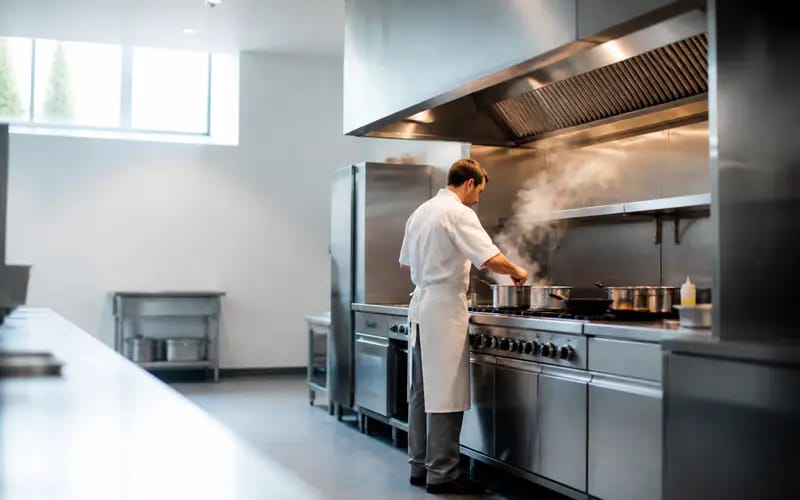
When a kitchen is hot, the usual response is to ask for a larger extract fan in order to remove more heated, contaminated air from the kitchen to try and cool it down.
Foodservice Equipment Journal have recently run a feature on designing effective ventilation systems for commercial kitchens. My reading of this is that, despite common perceptions, the key to a comfortable kitchen does not rest with the extract fans running hard to clear contaminated air from the space. What you replace that air with, and where you catch the heat in the first place, have far greater influence on the comfort of cooks and their colleagues.
The belief that more extract means cooler
“Even with a system that can effectively clear out the contaminated air, you can still have a very uncomfortable, very costly and potentially even unsafe kitchen if you’re not replacing the air that you’re extracting with suitable air,” Roger Burns, director at BW, says.
Replacement air is the missing half
You also need make-up air. The air that is extracted from the kitchen needs to be replaced with fresh air. This air will usually arrive at the kitchen cold in winter and so will feel as a cold draught on the cook’s face. Therefore it will normally need to be tempered before it can be usefully introduced into the kitchen. Tempering the make-up air is therefore an important part of the commercial kitchen installation and needs to be supplied and balanced as part of the overall ventilation strategy. In addition to the installation of the extract ventilation the make-up air needs to be balanced at the commissioning stage.
Capture at source beats brute force
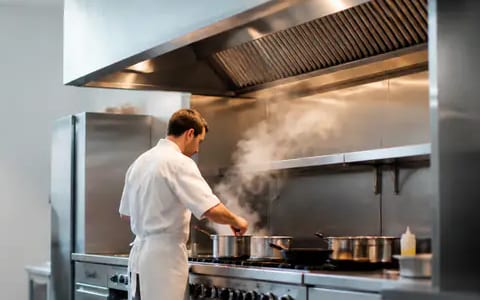
It is also important to capture cooking by-products effectively and to keep duct routes as short as possible, David Pedrette, founder of Target Catering Equipment tells FEJ. He is referring to the heat and steam that need to be removed from the kitchen before it can be diluted by the ventilation system and become less expensive to deal with. As Burns notes, a medium- to high-powered two-fan system running 12 hours a day will cost circa £4,000 to £6,000 per annum. Of course, much of this could be doubled if the air being taken into the system for replacement purposes is warmed up by electric heating.
There is no legal temperature to hit
In terms of cooling down the kitchen there is no legal temperature to hit, according to GOV.UK’s workplace temperature guidance. So in designing a kitchen comfort ventilation system you have to start with the cooking, menu, number of covers per hour etc.
Pedrette’s approach points the right way
A short duct route and effective capture can mean a system runs with less air. In terms of supply and therefore cost, this is far better than having to increase power to run. There is no need for extra horsepower.
Better capture beats a bigger fan
Next time someone wants a bigger fan, ask them where you are going to get the replacement air from and how well your hood is capturing the heat from the cooking process. A comfortable, safe kitchen does not have to be difficult to design. It is a simple capture-first approach.