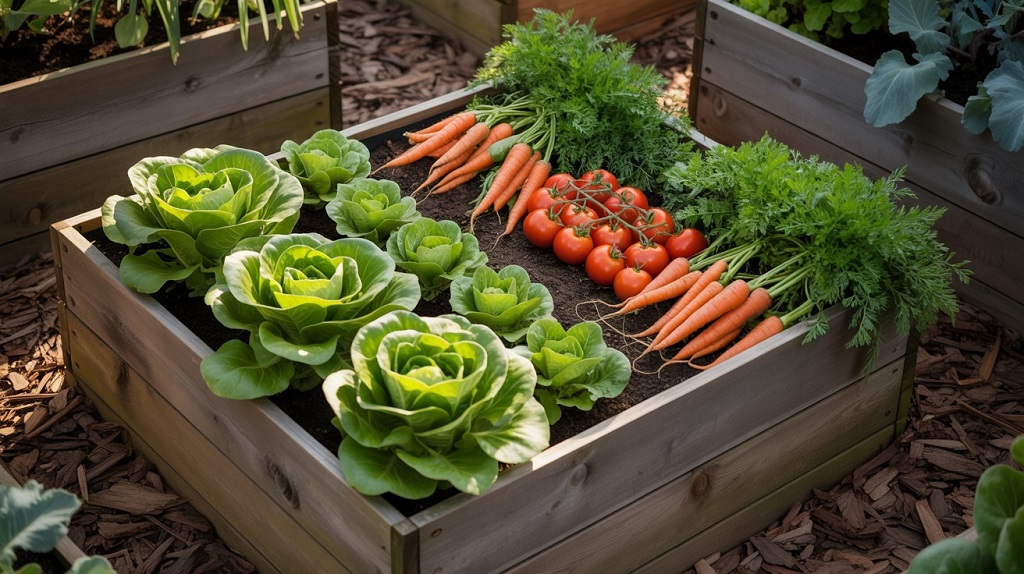
If you’ve ever dreamed of harvesting fresh, homegrown vegetables but don’t have the perfect soil or a large yard, raised bed gardening might be the solution you’ve been searching for. Raised beds not only make gardening easier but also boost productivity, improve drainage, and keep weeds under control.
But here’s the big question: What are the best vegetables to grow in a raised bed garden?
In this article, we’ll explore the top vegetables that thrive in raised beds, explain why they’re perfect choices, and give you practical tips to maximize your harvest. Whether you’re a beginner or a seasoned gardener, you’ll walk away with clear answers and actionable advice.
Why Raised Bed Gardening is a Game-Changer

Before diving into the vegetable list, let’s quickly highlight why raised beds are such a popular gardening method:
- Improved Soil Quality – You control the soil mix, ensuring it’s nutrient-rich and well-draining.
- Fewer Weeds & Pests – Elevated soil levels help reduce common garden weeds and keep crawling pests at bay.
- Easier to Manage – No more bending as much; gardening becomes more comfortable for your back and knees.
- Extended Growing Season – Raised beds warm up faster in spring, letting you plant earlier.
- Higher Yields – Concentrated growing space means more vegetables per square foot.
Now let’s dig into the vegetables that grow best in raised beds and why they’re perfect for this setup.
-
Leafy Greens (Lettuce, Spinach, Kale, and Swiss Chard)
Why They Thrive in Raised Beds:
Leafy greens grow quickly, don’t require deep soil, and benefit from the cooler soil temperatures in raised beds. Plus, harvesting is easier when your greens are at arm’s reach.
Tips for Success:
- Plant in early spring or fall for best results.
- Keep soil consistently moist for tender leaves.
- Try succession planting (sowing new seeds every 2–3 weeks) for a continuous harvest.
LSI Keywords: easy vegetables for raised beds, best crops for small gardens, cool-season vegetables.
-
Tomatoes
Why They Thrive in Raised Beds:
Tomatoes love the warm, nutrient-dense soil you can create in a raised bed. Better drainage reduces the risk of root rot, while vertical staking or cages fit perfectly in raised setups.
Tips for Success:
- Use deep soil (at least 12–18 inches) for strong root systems.
- Provide sturdy support like cages or trellises.
- Add compost and mulch to boost soil fertility.
Pro Tip: Consider companion planting with basil or marigolds in your raised bed to naturally deter pests.
-
Carrots and Root Vegetables (Radishes, Beets, Turnips)
Why They Thrive in Raised Beds:
Root vegetables often struggle in compacted garden soil. Raised beds allow you to create loose, sandy, rock-free soil that encourages straight, healthy roots.
Tips for Success:
- Choose a soil mix with sand or compost for better drainage.
- Thin seedlings properly for bigger, healthier roots.
- Harvest radishes in as little as 3–4 weeks for quick results.
LSI Keywords: best soil for carrots in raised beds, fast-growing vegetables, raised bed gardening tips.
-
Peppers (Bell Peppers, Jalapeños, Chili Peppers)
Why They Thrive in Raised Beds:
Like tomatoes, peppers enjoy the warm soil that raised beds provide. They also benefit from better airflow and sunlight exposure.
Tips for Success:
- Plant in full sun with at least 6–8 hours of light.
- Use organic mulch to retain moisture and suppress weeds.
- Fertilize with a balanced mix to promote fruit production.
-
Cucumbers
Why They Thrive in Raised Beds:
Cucumbers grow quickly and love warm soil. Using a trellis in your raised bed saves space and prevents fruit from sitting on damp soil, which reduces rot.
Tips for Success:
- Train vines vertically on a trellis.
- Keep soil moist, especially during fruiting.
- Harvest regularly to encourage continuous production.
Pro Tip: Pair cucumbers with beans in the same raised bed for nitrogen-fixing benefits.
-
Onions, Garlic, and Shallots
Why They Thrive in Raised Beds:
Bulb vegetables like onions and garlic do best in well-drained soil, which raised beds naturally provide. Plus, they don’t take up much vertical space.
Tips for Success:
- Plant garlic in fall for summer harvest.
- Space bulbs properly to avoid crowding.
- Keep beds weed-free since weeds compete heavily for nutrients.
LSI Keywords: raised bed crops, vegetables with shallow roots, easy gardening ideas.
-
Zucchini and Summer Squash
Why They Thrive in Raised Beds:
Zucchini is famous for producing huge harvests from just a couple of plants. Raised beds give their roots ample space while keeping soil aerated.
Tips for Success:
- Plant only 1–2 zucchini plants per raised bed to prevent overcrowding.
- Harvest when fruits are small for the best flavor.
- Watch for squash bugs and powdery mildew; raised beds help with airflow to reduce disease.
-
Beans (Bush Beans and Pole Beans)
Why They Thrive in Raised Beds:
Beans are nitrogen-fixers, meaning they naturally enrich the soil, making them perfect for crop rotation in raised beds.
Tips for Success:
- Bush beans are compact and great for smaller raised beds.
- Pole beans can climb trellises, saving valuable bed space.
- Succession plant every few weeks for steady harvests.
-
Broccoli, Cauliflower, and Cabbage (Cool-Season Brassicas)
Why They Thrive in Raised Beds:
These heavy feeders benefit from nutrient-dense soil in raised beds. Cooler soil temperatures extend their growing season in spring and fall.
Tips for Success:
- Add compost or organic fertilizer regularly.
- Watch for cabbage worms and use row covers if needed.
- Harvest broccoli heads before flowers open for best taste.
-
Herbs (Basil, Parsley, Cilantro, Thyme)
Why They Thrive in Raised Beds:
Herbs require little space and often thrive in the well-draining soil of raised beds. Having them nearby makes fresh seasoning just a step away.
Tips for Success:
- Mix herbs among vegetables for pest control benefits.
- Prune regularly to encourage bushy growth.
- Grow perennial herbs like thyme and oregano for year-round harvests.
Best Practices for Raised Bed Gardening
To get the most out of your raised bed, follow these additional tips:
- Choose the Right Soil Mix – A blend of compost, peat moss (or coco coir), and vermiculite/perlite works best.
- Practice Crop Rotation – Avoid planting the same vegetable family in the same spot each year to reduce pests and diseases.
- Water Consistently – Raised beds dry out faster, so regular watering is crucial.
- Use Mulch – Helps retain moisture and keeps soil temperatures stable.
- Maximize Space – Use vertical supports, interplanting, and succession planting for higher yields.
Read More Also: How to Choose a Good Gardener
Frequently Asked Questions (FAQs)
Q1. What vegetables should not be grown in raised beds?
Large spreading crops like pumpkins, corn, and potatoes may not be the best fit unless you have extra-large beds. They require more space than most raised beds provide.
Q2. How deep should a raised bed be for vegetables?
Most vegetables grow well in 12–18 inches of soil, though root crops like carrots may prefer deeper beds (up to 24 inches).
Q3. Do raised beds need special soil?
Yes. A mix of compost, topsoil, and a lightweight material like perlite or sand ensures good drainage and fertility.
Q4. Can you grow vegetables year-round in raised beds?
In many climates, yes. With cold frames, row covers, or hoop houses, you can extend your growing season significantly.
Q5. How often should I water my raised bed?
Raised beds usually need more frequent watering than in-ground gardens. Check daily in hot weather and water deeply when soil feels dry 1–2 inches below the surface.
Read More Also: How to Create a Wildflower Front Yard
Final Thoughts: Grow More with Raised Beds
Raised bed gardening is one of the easiest and most rewarding ways to grow your own vegetables. From leafy greens and tomatoes to root crops and herbs, the options are endless. With a little planning, you can enjoy a garden that’s easier to manage, more productive, and healthier for your plants.