A single hanging basket can produce a handful of warm, sweet berries by early summer, and you do not need a garden bed to make that happen. If you want to grow strawberries in containers, the essential idea is simple: give each plant enough root room, sun, and drainage, and it will reward you with fruit within one season. The https://begardenly.com/ approach favors practical, low-cost setups that fit balconies and narrow patios. This guide covers pot size, varieties, watering, feeding, and the mistakes that cost most beginners their crop.
Quick answer: Choose a pot at least 10 to 12 inches deep with drainage holes, use a quality potting mix, and plant a day-neutral or everbearing variety for a long harvest. Give the plants six to eight hours of direct sun and keep the soil evenly moist. Expect your first ripe berries in roughly 60 to 90 days.
What is grow strawberries in containers?
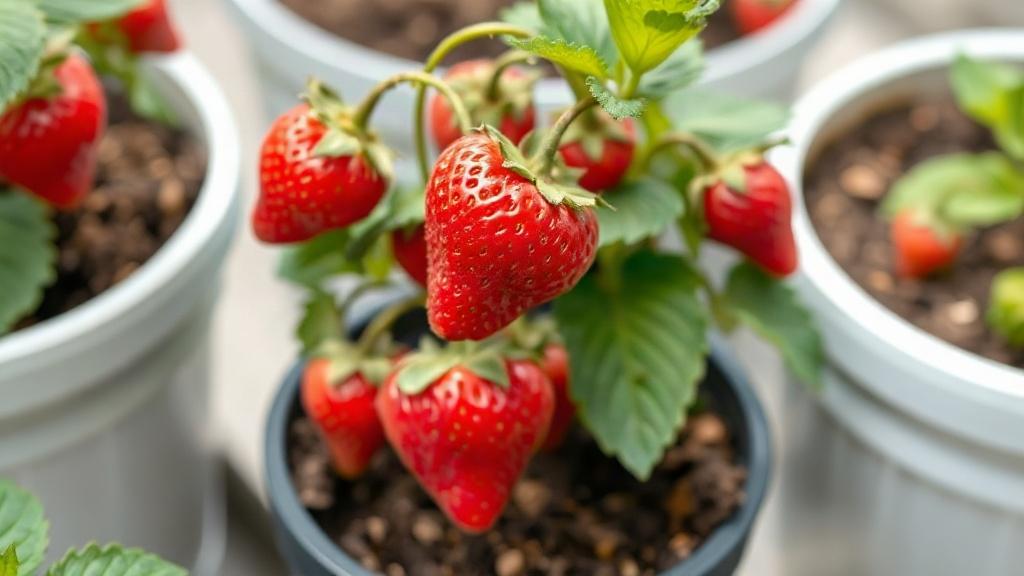
Growing strawberries in containers means raising the plants in pots, window boxes, hanging baskets, or tiered planters instead of open ground. The plants are the same species you would grow in a bed; only the growing environment changes. A container gives you full control over soil, moisture, and placement, which matters on a patio where space is tight.
Strawberries come in three main types, and the choice shapes your harvest:
- June-bearing: one heavy crop in late spring or early summer, then mostly foliage.
- Everbearing: two smaller crops, one in early summer and one in late summer or fall.
- Day-neutral: fruit steadily through the season whenever temperatures stay moderate.
For containers, day-neutral and everbearing types usually work best. They keep producing over a longer window, so a few pots deliver berries across several months rather than a single burst.
Container size drives everything else. A standard 12-inch pot holds one plant comfortably. Strawberry planters with side pockets fit three to five plants in the same floor space. Hanging baskets work well because the fruit drapes over the edge, away from slugs and soil splash.
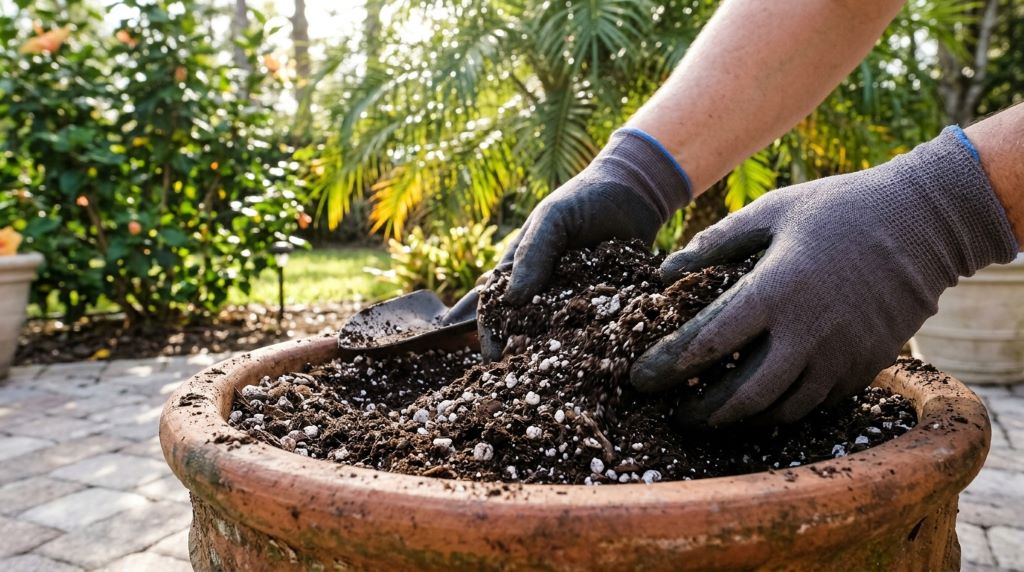
Soil matters more than most beginners expect. Use a light potting mix rather than garden soil, because garden soil compacts in pots and drains poorly. A mix with perlite or coarse bark keeps air around the roots, which strawberries need to stay healthy.
A strawberry plant in a cramped pot will live, but it produces fewer and smaller berries. Root volume limits how much water and nutrients the plant can take up, so pot size is a direct input to yield.
The takeaway: pick a variety suited to containers, give each plant real root room, and start with a light, free-draining mix.
Why grow strawberries in containers matters
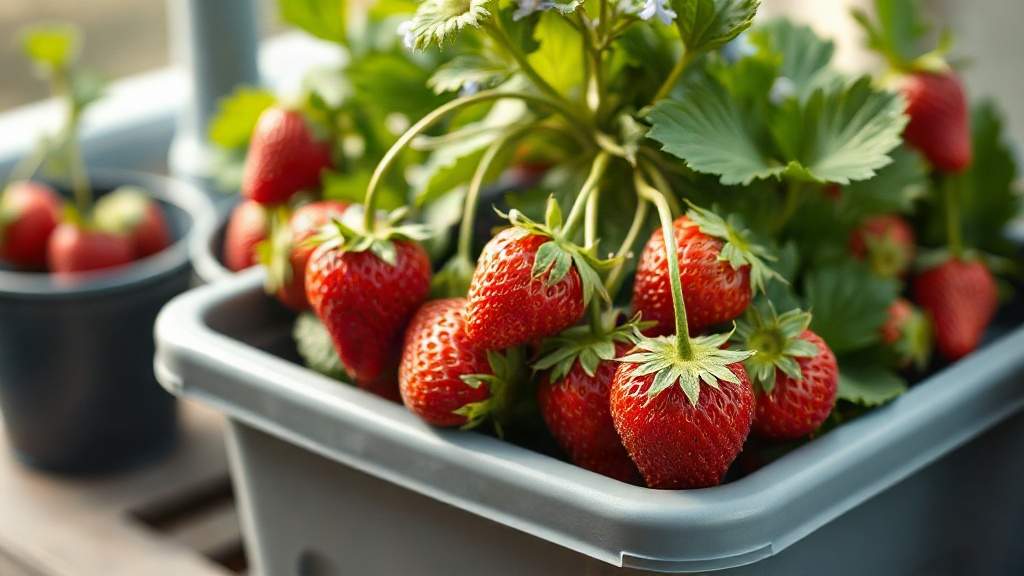
Space is the obvious reason. A patio of a few square feet can host several pots, and vertical planters or hanging baskets let you stack plants upward where floor space does not exist. Strawberries also make attractive container plants, with white flowers in spring and fruit that ripens in plain view.
Containers solve several practical problems at once:
- Pest and disease control: raising fruit off the ground reduces slug damage and keeps berries clean.
- Soil control: you avoid whatever pests, weeds, or drainage issues exist in your local ground.
- Mobility: you can move pots to chase sun or shelter them from heavy rain and frost.
- Small harvests that add up: a few plants supply enough berries for fresh eating, even if you are not aiming to fill the freezer.
Cost is modest. A pot, a bag of potting mix, and a few plants are the main outlay, and many gardeners keep plants over winter to reduce the next year’s spend. Runners also let you propagate new plants for free. If you want to expand your patch without buying more plants, learning how to divide strawberry plants and root runners is a practical next step.
There are limits worth naming. Containers dry out faster than garden beds, so they demand more frequent watering. They also freeze harder in winter, which can kill plants left outdoors in cold regions. Neither problem is fatal; both simply require planning.
The takeaway: containers trade a little extra watering for cleaner fruit, better pest control, and a harvest that fits a small space.
Best practices
Success comes down to a short list of habits: the right pot, steady moisture, regular feeding, and a little upkeep through the season.
Choose the right pot and placement
Go for a pot at least 10 to 12 inches deep with clear drainage holes. Terracotta dries faster than plastic, which suits humid climates but demands more watering in dry heat. Place pots where they get six to eight hours of direct sun daily; strawberries tolerate some afternoon shade but fruit best in full sun.
Plant at the right depth
Set each plant so the crown, the point where stems meet roots, sits at soil level. Bury it and the crown rots; leave it too high and roots dry out. Water thoroughly after planting and keep the mix moist for the first two weeks while roots establish.
Water and feed consistently
Check moisture every day or two during warm weather. Aim for evenly moist soil, not soggy. Feed with a balanced liquid fertilizer every two to three weeks during the growing season, and switch to a formula higher in phosphorus and potassium once flowers appear to support fruiting.
Manage runners and tidy plants
Remove runners, the long stems that produce new plantlets, unless you want more plants. Left alone, they divert energy from fruit. Snip off spent leaves and old flowers to keep air moving and reduce disease.
Protect the harvest
Mulch the surface of the soil with straw or a similar material to keep fruit clean. Bird netting or a light fabric cover protects ripening berries on an open patio.
The takeaway: depth, sun, steady water, and routine feeding carry most of the result; small maintenance habits protect it.
Common mistakes to avoid
Most container strawberry failures trace back to a handful of avoidable errors. Fixing these early saves a season.
- Too-small pots: a 6-inch pot stunts growth. One plant needs at least a 12-inch pot, or equivalent root volume in a planter.
- No drainage: pots without holes collect water and rot roots. Drill or choose pots with open holes.
- Overwatering or letting pots dry out: both stress plants. Check the soil before watering rather than following a fixed schedule.
- Planting the crown too deep: this is one of the most common causes of plant loss. Keep the crown level with the soil surface.
- Skipping fertilizer: containers hold limited nutrients, and heavy watering leaches them out. Feed on a schedule.
- Crowding plants: more plants per pot does not mean more fruit. Crowded roots and leaves invite disease and reduce yield.
- Ignoring winter: in cold regions, move pots to a sheltered spot or insulate them, because roots in containers freeze harder than roots in ground.
- Letting runners take over: unmanaged runners drain energy and tangle into a dense mat that traps moisture.
Comparison: pot size vs. expected capacity
| Pot size | Plants | Notes |
|---|---|---|
| 6 inches | 0–1 | Too small for good fruiting |
| 10–12 inches | 1 | Reliable minimum for one plant |
| 16–18 inches | 2–3 | Better moisture buffer |
| Tiered planter | 3–5 | Efficient use of floor space |
Notice that capacity grows faster than pot width, because larger soil volume holds moisture longer. A slightly bigger pot is easier to manage than several small ones.
The takeaway: avoid cramped pots, buried crowns, and erratic watering, and your plants will handle the rest.
FAQ
How much does it cost to start a container strawberry patch?
A pot, a bag of potting mix, and two or three plants are modest purchases at most garden centers. Reusing pots and propagating runners in later seasons lowers the ongoing cost considerably.
How long until I get berries?
Most varieties fruit within roughly 60 to 90 days of planting, depending on type and weather. Day-neutral types can start sooner and keep producing longer than June-bearing ones.
Can strawberries grow in partial shade on a patio?
They can survive in partial shade, but fruiting suffers. Aim for six to eight hours of direct sun for a solid harvest; a spot with morning sun and light afternoon shade is a reasonable compromise.
Do I need to replace the plants every year?
Not necessarily. Many gardeners keep plants for two to three seasons, then start fresh because older plants produce less. Renewing stock from runners keeps the patch productive.
What is the biggest mistake beginners make?
Planting the crown too deep or using a pot that is too small. Both are easy to prevent and hard to correct once the plant is stressed.
Conclusion
Growing strawberries in containers on a small patio comes down to a few reliable choices: a pot with real depth and drainage, a day-neutral or everbearing variety, steady moisture, and regular feeding. Avoid buried crowns, cramped roots, and erratic watering, and the plants will do the rest of the work. Plan your setup now, gather your pots and mix, and start with two or three plants so you can learn what your patio’s light and weather demand.