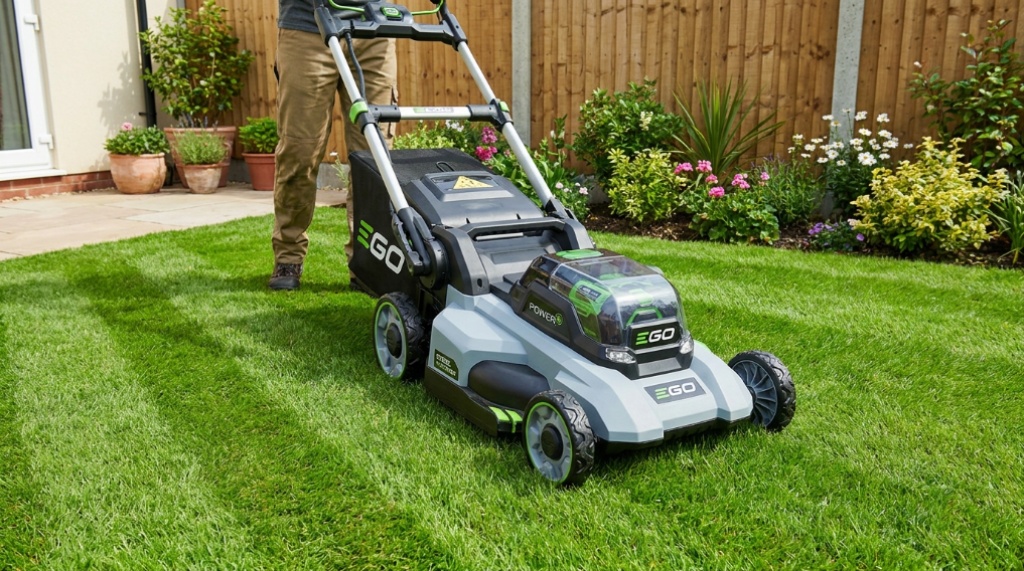
If you own a quarter-acre or less, a gas mower is often more machine than the job requires — and more maintenance than most homeowners want. That’s the core argument for the BLACK+DECKER 3-in-1 electric mower, which is built specifically for smaller lawns where maneuverability, low maintenance, and easy storage matter more than raw cutting power. This article breaks down seven practical reasons it outperforms gas in that context, along with the trade-offs you should understand before buying.
Key Takeaways
- Electric mowers make the most sense on lawns under roughly 1/4 acre, where run time and cutting width are rarely limiting factors.
- No gas, oil changes, spark plugs, or pull cords means near-zero routine maintenance beyond blade care and battery charging.
- Cordless models start instantly, run quieter, and produce no exhaust fumes — useful for small lots, fenced yards, and noise-sensitive neighborhoods.
- The 3-in-1 design (bagging, mulching, side discharge) covers most cutting conditions without buying extra attachments.
- Run time, battery cost, and wet-grass performance are the main real limitations to weigh against a gas mower.
Why Electric Beats Gas on Small Lawns
Electric mowers win on small lawns because the disadvantages of gas engines — weight, maintenance, fuel handling, noise, and emissions — matter more than the advantages, which are mostly power and run time. On a small property, you rarely need either to the degree a gas mower provides.
The BLACK+DECKER 3-in-1 electric mower sits in this category as a corded or cordless push mower designed for residential lawns, not acreage. The 3-in-1 label refers to its three cutting modes: rear bagging, mulching, and side discharge. That single feature covers most mowing scenarios without requiring you to buy or swap attachments.
1. No Gas, No Oil, No Engine Maintenance
A gas mower requires an annual ritual: change the oil, replace the spark plug, clean or replace the air filter, stabilize or drain the fuel, sharpen the blade, and hope the carburetor doesn’t gum up over winter. An electric mower eliminates almost all of it.
With a BLACK+DECKER electric mower, routine upkeep is essentially:
- Charge the battery (cordless) or check the cord (corded)
- Clean grass clippings from the deck after mowing
- Sharpen or replace the blade once a season or as needed
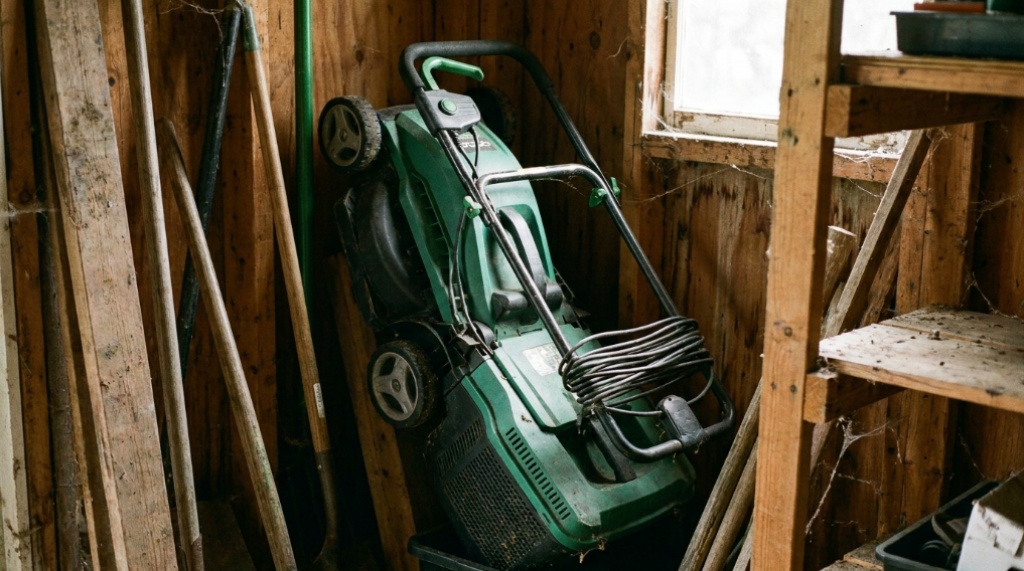
That difference is more significant than it sounds. Small-engine repairs are one of the most common reasons gas mowers end up abandoned in garages. Eliminating fuel and combustion removes the failure points that cause most of those problems.
2. Instant Starts and No Pull-Cord Frustration
You press a button and mow. There’s no priming, no choke, no pulling a cord five times, and no flooding the engine. For anyone who has wrestled with a cold gas mower in spring, this is the single most noticeable quality-of-life improvement.
It also matters for short mowing sessions. If your lawn takes 15 minutes, you’re more likely to actually do it when starting the mower takes two seconds instead of two minutes of fussing.
3. Lighter Weight and Easier Maneuvering
Electric push mowers generally weigh less than comparable gas models because they don’t carry an engine block, fuel tank, and exhaust system. On a small lawn with tight corners, flower beds, and narrow strips between fences, that lighter weight translates directly into less effort — especially when pushing uphill or turning around obstacles.
If your yard has gates, side passages, or a shed with limited space, the lighter footprint also makes storage and moving the mower between front and back yards noticeably easier.
4. Quiet Operation and Zero Exhaust Fumes
Electric mowers are dramatically quieter than gas models, and they produce no exhaust. In practice, that means:
- You can mow earlier in the morning or later in the evening without annoying neighbors.
- You’re not breathing combustion fumes while pushing the mower.
- It’s safer to store indoors (no fuel vapors).
For small suburban lots where houses sit close together, the noise and smell differences are usually the reasons people switch in the first place.
5. The 3-in-1 System Covers Most Cutting Conditions
The BLACK+DECKER 3-in-1 electric mower gives you three discharge options in one unit:
| Mode | Best For | Trade-off |
|---|---|---|
| Mulching | Regular cuts, healthy lawns, adding nutrients back to soil | Can clump in tall or wet grass |
| Bagging | Overgrown grass, leaves, or when you want a clean finish | Bag fills quickly; more stops to empty |
| Side discharge | Fast mowing of longer grass | Leaves visible clippings on the lawn |
Mulching is the default for most small-lawn owners because it saves time, returns nutrients to the soil, and avoids bag handling. Bagging becomes useful in spring when growth is fast, or in fall for leaves. Side discharge helps when grass has gotten ahead of you.
6. Lower Ongoing Costs for Small Properties
The cost picture depends heavily on lawn size and local electricity and fuel prices, but the general pattern holds: electric mowers have lower operating costs per mow on small lawns.
You’re not buying gasoline, oil, spark plugs, or air filters. Electricity to charge a battery or run a corded mower is inexpensive relative to gas. The main upfront cost is the battery system for cordless models, and that’s the factor most worth thinking through carefully.
7. Simpler Storage and Winterizing
Gas mowers need fuel stabilization, or you risk a dead carburetor in spring. Electric mowers don’t have that problem. For cordless models, the recommended approach is usually to charge the battery to a partial level, store it in a cool, dry place, and keep it away from extreme temperatures.
That makes end-of-season storage a five-minute task instead of a maintenance project. For small-yard homeowners who only mow part of the year, this is a meaningful advantage, for alternative eco-friendly options, check out our guide on how a reel mower 1204 7 reasons texas homeowners love it for more ideas.
When a Gas Mower Still Makes More Sense
Electric mowers aren’t the right choice for every property. You should reconsider gas if:
- Your lawn is larger than roughly 1/4 acre, where battery run time and recharge cycles become limiting.
- You regularly mow thick, wet, or overgrown grass that demands sustained torque.
- You need to mow for more than an hour in a single session without stopping.
- You want to attach accessories like a bagger, dethatcher, or snow blade that require more power.
Cordless run time varies by model, battery size, and cutting conditions, so check the manufacturer’s stated run time and battery capacity before assuming it will cover your lawn in one charge. Corded models run indefinitely but require an outlet and a long enough cord, which limits how far you can reach.
What to Check Before Buying
Before choosing a BLACK+DECKER 3-in-1 electric mower, match the model to your specific yard. Key factors:
- Cutting width: Narrower decks are easier to maneuver around obstacles; wider decks cut more grass per pass.
- Battery voltage and capacity: Higher voltage generally means more cutting power; amp-hours affect run time.
- Cutting height adjustment: Single-lever adjustment saves time if you change heights seasonally.
- Grass bag capacity: Larger bags mean fewer emptying stops if you bag regularly.
- Foldability and storage: Important if you have limited garage or shed space.
- Warranty coverage: Check both the mower and battery warranty terms, since batteries are the most expensive replaceable component.
Frequently Asked Questions
How large a lawn can a BLACK+DECKER 3-in-1 electric mower handle?
Most cordless models are suited to small to medium residential lawns, often in the range of roughly 1/8 to 1/4 acre per charge, depending on battery size and grass conditions. Larger lawns may require a second battery or a gas mower.
Does the 3-in-1 feature mean it bags, mulches, and side discharges?
Yes. The 3-in-1 design allows you to switch between rear bagging, mulching, and side discharge, typically by adjusting a rear plug or attachment. You don’t need to buy separate accessories for each mode.
Can I mow wet grass with an electric mower?
You can, but it’s not recommended for any mower type. Wet grass clumps, clogs the deck, and strains the motor. It also increases the risk of slipping. For best results, mow when the grass is dry, especially in mulching mode.
How long does the battery last, and how long to charge?
Run time and charge time vary by battery voltage and capacity. A general rule: larger batteries run longer but take longer to charge. Check the specific model’s manual for exact figures, since they differ significantly across the BLACK+DECKER lineup.
Is an electric mower strong enough for thick grass?
For routine mowing of healthy residential lawns, yes. For very thick, wet, or overgrown grass, a gas mower still has the advantage in sustained torque. If your grass is frequently overgrown, mow more often or take a first pass at a high cutting height.
Do I need to winterize an electric mower?
Not in the way you winterize a gas mower. There’s no fuel to stabilize. Normally you just clean the deck, check the blade, and store the battery properly — typically partially charged, in a cool, dry place, away from freezing temperatures.
Conclusion
For small yards, the BLACK+DECKER 3-in-1 electric mower is a practical upgrade over gas. Instant starts, near-zero maintenance, quieter operation, no fumes, and easier storage matter more than the extra power and run time a gas mower offers — as long as your lawn fits within the battery’s realistic range. If it does, you’ll spend less time maintaining the mower and more time actually mowing. If you have a larger lot or routinely cut heavy growth, gas still earns its place.