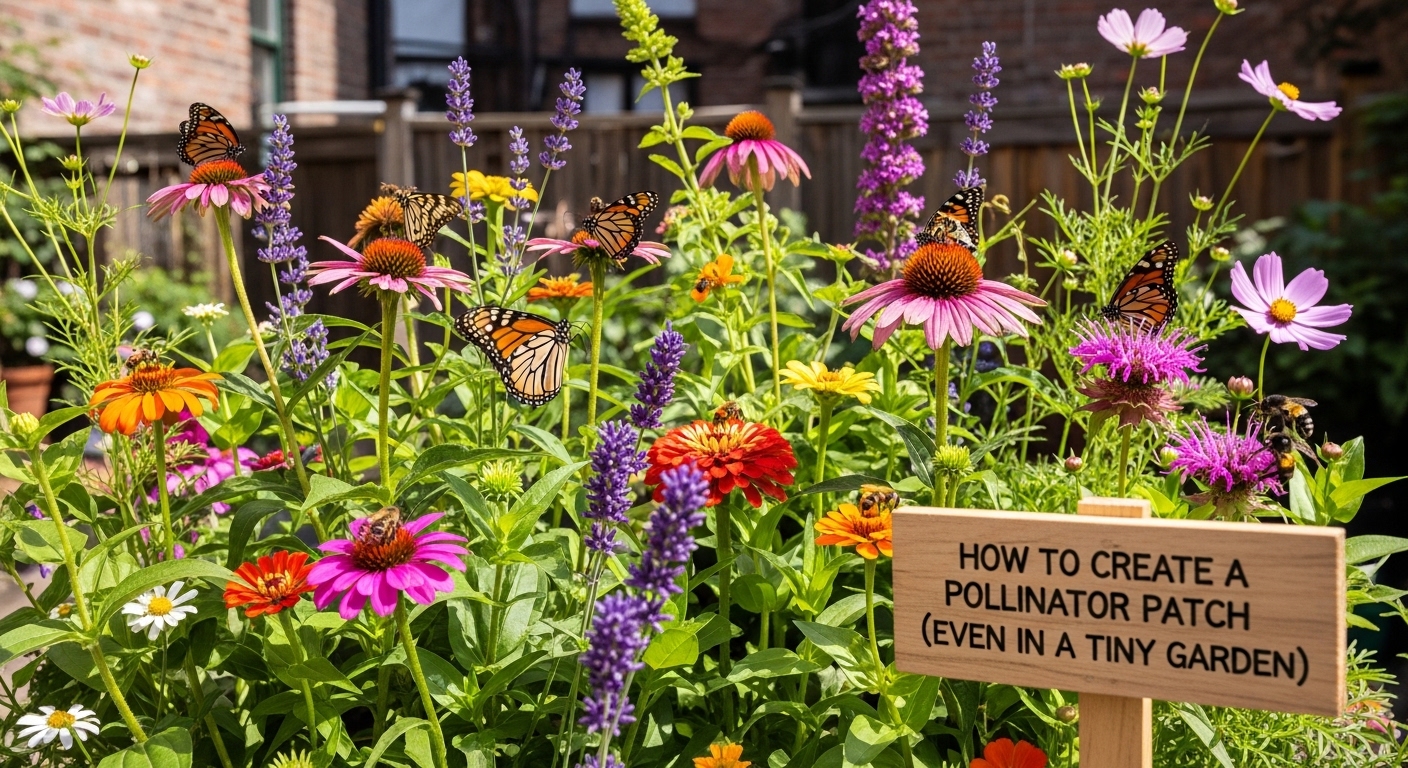
Pollinators are disappearing fast, and most home gardens are not helping. Lawns dominate small spaces. Pesticides remove food sources. Decorative plants often produce little nectar. The result is fewer bees, fewer butterflies, and weaker local ecosystems.
The good news is you do not need a large yard to support pollinators. Even a balcony, corner bed, or container cluster can become a high-impact habitat. A small pollinator patch can supply nectar, shelter, and breeding space if designed correctly.
This guide explains exactly how to create a pollinator patch in tight spaces using simple layouts, low-cost plants, and proven habitat strategies that work in urban and rural gardens alike.
What Is a Pollinator Patch and Why Does It Matter?
Snippet Answer: A pollinator patch is a small garden area planted with nectar-rich flowers, native plants, and shelter features that attract bees, butterflies, and beneficial insects. Even a tiny patch improves pollination, increases biodiversity, strengthens plant health, and supports local food systems.
Answer Block: A pollinator patch is a compact planting zone designed to supply nectar, pollen, water, and shelter for insects like bees and butterflies. Even small patches improve crop yields, strengthen biodiversity, and help restore declining pollinator populations in urban and suburban environments.
Pollinators move constantly between feeding sites. They do not require large gardens. They require reliable resources spaced across neighborhoods.
That means a single balcony container can support dozens of visits per day during flowering season.
Pollinator patches benefit:
- vegetable productivity
- fruit tree pollination
- seed formation
- soil biodiversity
- urban ecosystem balance
Small patches act like stepping stones between larger habitats. When multiple homes create them, entire local pollinator corridors form naturally.
This is why even a one-square-meter patch matters.
How Much Space Do You Need for a Pollinator Patch?
Answer Block: A pollinator patch can succeed in spaces as small as one square meter or three medium containers. The key requirement is dense planting of nectar-rich flowers with staggered bloom times rather than total area size.
Many gardeners assume pollinator habitats require lawns or large beds. That assumption stops people from starting.
In reality, pollinators respond more strongly to plant quality than garden size.
Effective micro-patch locations include:
- balcony corners
- front walkway borders
- window boxes
- raised beds
- rooftop planters
- unused lawn strips
The goal is visual clustering. Pollinators prefer flower groupings rather than isolated plants.
A dense cluster increases visibility from the air and improves landing efficiency.
Even three containers placed together outperform ten containers scattered across a space.
Start small. Expand later if needed.
Which Plants Attract the Most Pollinators in Small Gardens?
Answer Block: The best pollinator plants for small gardens include native wildflowers, herbs, and long-blooming annuals such as lavender, marigold, basil, cosmos, and zinnia. These species provide continuous nectar while fitting easily into compact planting layouts.
Plant selection determines patch success more than layout design.
Choose species that bloom across multiple seasons.
| Plant | Pollinators Attracted | Bloom Duration | Container Friendly |
|---|---|---|---|
| Lavender | Bees, butterflies | Long | Yes |
| Zinnia | Butterflies | Very long | Yes |
| Basil (flowering) | Bees | Medium | Yes |
| Cosmos | Bees, hoverflies | Long | Yes |
| Marigold | Bees, beetles | Long | Yes |
Native plants are always preferred because local insects evolved alongside them.
However, herbs are excellent substitutes where native species are unavailable.
Allow herbs like basil and coriander to flower instead of harvesting early.
This dramatically increases nectar supply.
How Do You Design a Pollinator Patch Layout in a Tiny Area?
Answer Block: Design a small pollinator patch by clustering three to five nectar-rich species together, layering plant heights from back to front, and ensuring continuous seasonal blooms. Dense planting improves visibility and increases pollinator visits even in narrow spaces.
Pollinator patches should prioritize efficiency over decoration.
Use a simple three-layer structure:
- Tall flowers at the back
- Medium bloomers in the center
- Low nectar plants at the edge
This layout improves landing access and airflow.
Cluster plants in groups of three or more.
Single isolated plants attract fewer pollinators.
Color diversity improves detection distance.
Include:
- yellow flowers
- purple flowers
- white flowers
Different insects prefer different wavelengths.
Mixed color clusters increase total species visits.
How Can You Provide Water and Shelter for Pollinators?
Answer Block: Pollinators need shallow water sources, undisturbed soil patches, and natural shelter such as sticks or leaf litter. Providing these micro-habitats increases survival rates and encourages insects to stay near your garden longer.
Most gardeners focus only on flowers.
Habitat support is equally important.
Add a shallow water dish with stones inside.
This prevents drowning while allowing safe drinking.
Leave a small soil patch uncovered.
Ground-nesting bees rely on exposed soil.
Additional shelter features include:
- dry stems
- twigs
- bark pieces
- leaf mulch corners
Avoid removing all plant debris after flowering season.
Many insects overwinter inside stems.
Should You Avoid Pesticides in a Pollinator Patch?
Answer Block: Avoid pesticides in pollinator patches because even low-dose chemicals disrupt navigation, feeding behavior, and reproduction. Natural pest control methods protect beneficial insects while maintaining plant health.
Many insecticides harm pollinators indirectly.
Even products labeled “safe” can affect behavior.
Use alternative strategies instead:
- manual pest removal
- companion planting
- soap spray solutions
- healthy soil management
Healthy ecosystems regulate pests naturally.
Hoverflies and ladybugs often appear after pollinator patches establish.
These insects reduce aphid populations quickly.
Avoid spraying during flowering periods.
How Do You Maintain a Pollinator Patch Year-Round?
Answer Block: Maintain a pollinator patch by rotating seasonal flowers, allowing some plants to reseed, keeping water sources clean, and leaving stems through winter. Continuous bloom cycles ensure pollinators always have access to nectar throughout the year.
Consistency matters more than complexity.
Replace expired blooms with new seasonal species.
Use this seasonal rotation strategy:
- spring: coriander flowers, alyssum
- summer: zinnia, basil, cosmos
- autumn: marigold, sunflower
Allow at least one plant to seed naturally.
This reduces planting costs next season.
Trim selectively rather than clearing everything.
Standing stems provide winter shelter.
Can Containers Work as a Full Pollinator Patch?
Answer Block: Yes, container gardens can function as complete pollinator patches if they include multiple nectar species, continuous bloom timing, and shallow water sources. Grouped containers often attract as many insects as small ground beds.
Container patches are ideal for renters and balcony gardeners.
Use medium-depth pots with drainage holes.
Arrange containers in clusters rather than rows.
Choose at least three flowering species per cluster.
Place containers where sunlight reaches for six hours daily.
South-facing balconies perform best.
Combine herbs and flowers together.
This increases pollinator diversity quickly.
Conclusion: Build a Small Patch That Makes a Big Ecological Difference
A pollinator patch does not require land, expensive plants, or advanced gardening experience. It requires thoughtful plant selection, clustered layouts, safe watering points, and pesticide-free maintenance.
Even a compact patch supports bees, butterflies, hoverflies, and beneficial insects that strengthen ecosystems and improve nearby plant productivity.
Start with three flowering species. Add a shallow water dish. Leave one soil patch exposed. Allow plants to bloom fully.
These small steps create measurable ecological impact within weeks.
Create your pollinator patch today and turn even the smallest garden corner into a biodiversity hotspot that supports local food systems and restores essential insect populations.
Frequently Asked Questions
What is the minimum size for a pollinator patch?
A pollinator patch can be as small as one square meter or three grouped containers. Dense planting matters more than area size.
Do pollinator patches attract pests?
No. Pollinator patches usually attract beneficial insects like ladybugs and hoverflies that reduce harmful pest populations naturally.
How long before pollinators start visiting?
Pollinators often begin visiting within two to four weeks after flowering plants open.
Are native plants required for success?
Native plants improve effectiveness but herbs and nectar-rich annual flowers also support pollinators well.
Can pollinator patches grow in partial sunlight?
Yes. Many pollinator plants tolerate partial sunlight, but at least four to six hours of light improves results.
Should flowers be planted in groups or individually?
Grouped flowers attract more pollinators because they improve visibility and feeding efficiency.
Do pollinator patches work on balconies?
Yes. Balcony patches with clustered containers and flowering herbs attract bees and butterflies effectively.
Read More Also: How to Use AI Garden Assistants to Automate Your Watering and Fertilization in 2026