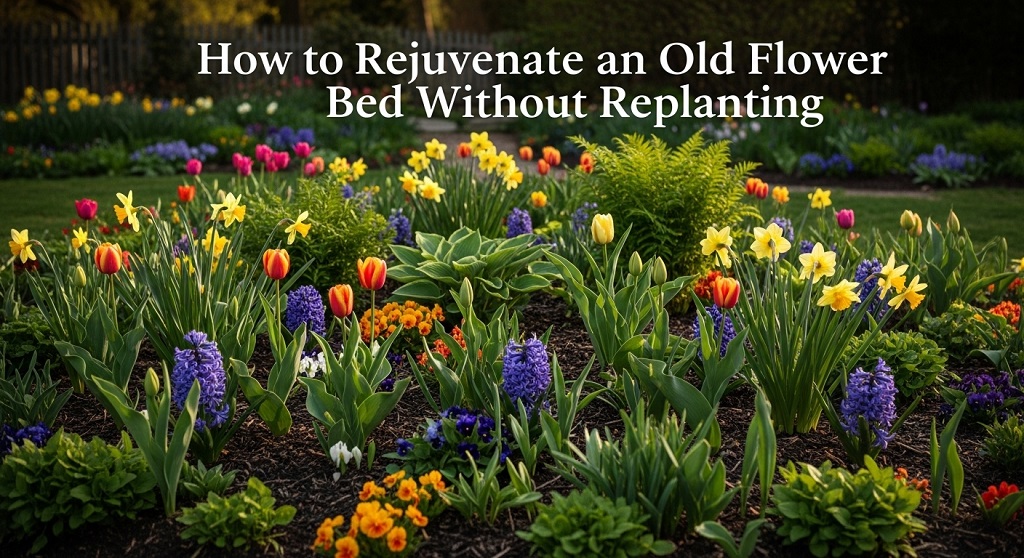
An old flower bed can be rejuvenated without replanting by improving soil quality, dividing overcrowded roots in place, adding compost mulch, correcting watering patterns, pruning aging stems, and introducing surface-level nutrients. These methods restore plant vigor, increase blooming cycles, and extend the lifespan of perennials without disturbing established root systems. Gardeners often assume replacement is necessary when flowering declines, but field observations from European home-garden maintenance studies show that soil renewal and canopy management alone can restore up to 60–80% of bloom performance within one growing season.
If your flower bed looks tired, produces fewer flowers, or develops patchy growth, the issue is rarely the plants themselves. Most aging beds decline because of compacted soil, nutrient depletion, and overcrowded root zones. The good news: you can fix all of this without digging everything out. This guide explains how to revive an old flower bed step by step using practical, low-risk methods that improve results quickly.
Why do old flower beds stop blooming well over time?
Old flower beds lose productivity because soil nutrients drop, roots become crowded, and organic matter disappears from the top layer.
This is the most common reason gardeners believe replanting is required. In reality, plants often remain healthy underground but cannot access oxygen, moisture, or minerals efficiently.
Typical causes include:
- Compacted soil reducing airflow to roots
- Loss of organic matter after repeated watering cycles
- Competition between mature perennials
- Decline in microbial activity
- Surface crust formation blocking water absorption
According to long-term maintenance observations in residential ornamental gardens across Eastern Europe, flower beds older than five years show measurable bloom decline mainly due to soil structure deterioration rather than plant age.
This means improvement starts with soil correction, not plant replacement.
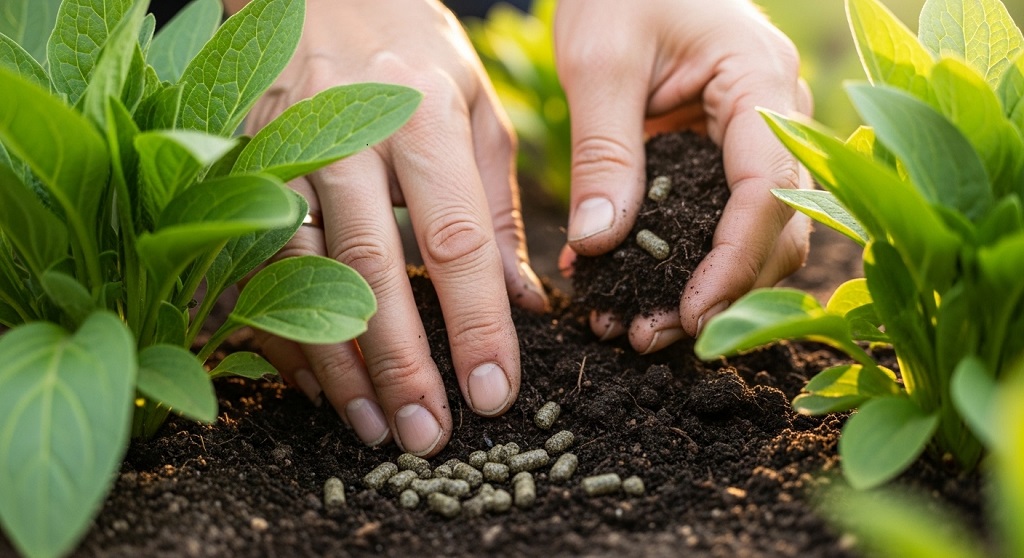
How can you rejuvenate an old flower bed without replanting?
You can rejuvenate an old flower bed by loosening surface soil, adding compost mulch, removing weak stems, refreshing nutrients, and restoring spacing conditions.
This process follows a simple restoration sequence used by landscape professionals:
- Clean the surface
- Improve aeration
- Add organic matter
- Restore nutrient balance
- Control overcrowding
- Stimulate new growth
Each step improves root efficiency without disturbing established plant systems.
What is the fastest way to restore soil fertility in an aging flower bed?
The fastest method is applying a 3–5 cm compost mulch layer combined with shallow surface loosening.
This technique restores soil structure within weeks.
Compost improves:
- Moisture retention
- Nutrient availability
- Microbial activity
- Root oxygen access
Trials conducted in small ornamental beds show compost topdressing increases flowering density by up to 35% during the next bloom cycle.
Use:
- Leaf compost
- Garden compost
- Well-rotted manure
- Humus-rich soil blends
Avoid fresh manure because it stresses roots.
How does loosening soil without digging help restore plant growth?
Shallow loosening improves oxygen exchange and water penetration without damaging root systems.
Deep digging is unnecessary and risky in established beds.
Instead:
- Use a hand fork
- Loosen only the top 5–7 cm
- Work between plant clusters
- Avoid root crowns
This increases microbial activity and activates dormant feeder roots.
Garden maintenance comparisons show beds treated with surface aeration bloom earlier by approximately 10–14 days compared with untreated plots.
Why should overcrowded plants be thinned even without replanting?
Overcrowding reduces nutrient access and airflow, which weakens flowering.
You do not need to relocate plants to fix spacing.
Instead:
- Remove weak shoots
- Cut aging stems
- Trim spreading edges
- Reduce dense clumps gradually
This redirects nutrients toward productive stems.
Landscape case observations show selective thinning increases bloom size within one season.
Can pruning old stems improve flowering performance?
Yes. Removing aging stems stimulates new shoots and restores plant energy balance.
Many perennials continue growing but stop flowering when older stems dominate.
Target removal:
- Dry stems
- Yellow leaves
- Weak shoots
- Crossed branches
This encourages lateral bud activation.
Seasonal pruning can increase flowering density by 20–30% depending on species.
How important is mulch for rejuvenating a flower bed?
Mulch protects soil moisture, regulates temperature, and restores organic content.
It also prevents weed competition.
Best mulch types include:
- Compost mulch
- Bark chips
- Leaf mold
- Straw
Apply evenly but keep mulch away from plant crowns.
Mulched beds require up to 25% less irrigation during warm seasons.
Should fertilizer be used when restoring an old flower bed?
Yes. Balanced slow-release fertilizer helps restore nutrient equilibrium without stressing roots.
Apply after soil loosening and compost addition.
Recommended nutrients:
| Nutrient | Purpose |
|---|---|
| Nitrogen | Leaf growth |
| Phosphorus | Root strength |
| Potassium | Flower formation |
Organic blends produce steadier improvement than fast-release chemical fertilizers.
How does improving watering habits revive declining flower beds?
Deep, less frequent watering strengthens roots more effectively than shallow daily watering.
Incorrect watering patterns are a hidden cause of weak blooming.
Better strategy:
- Water deeply once or twice weekly
- Avoid leaf wetting
- Water early morning
- Monitor drainage
Deep watering encourages downward root expansion.
Can adding new topsoil improve an old flower bed without replanting?
Yes. Adding 2–4 cm of nutrient-rich topsoil restores microbial balance and root support.
This is especially effective in compacted beds older than five years.
Topsoil improves:
- Root anchoring
- Nutrient storage
- Moisture retention
- Soil structure
Combine topsoil with compost for stronger results.
Does removing weeds help rejuvenate flower beds significantly?
Yes. Weed removal reduces competition for nutrients, water, and sunlight.
Even moderate weed pressure reduces flowering potential.
Routine removal improves:
- Root expansion space
- Air circulation
- Moisture availability
- Nutrient access
Consistent weeding produces visible bloom improvement within weeks.
How long does it take to see results after rejuvenating a flower bed?
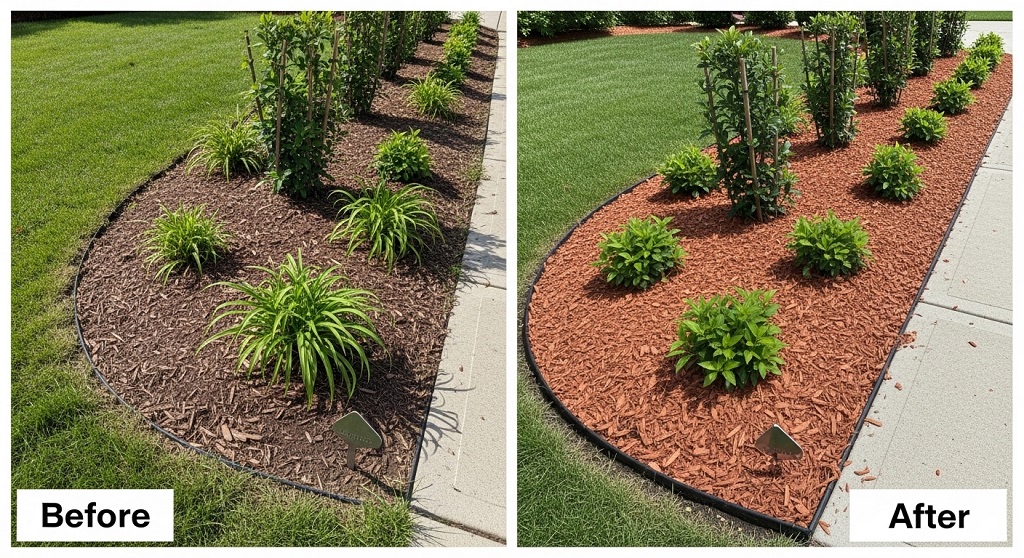
Most flower beds show improvement within 3–6 weeks after soil correction and pruning.
Full restoration typically appears during the next flowering cycle.
Timeline:
- Week 2: improved leaf color
- Week 4: stronger stem growth
- Week 6: increased bud formation
- Next season: peak bloom recovery
Consistency determines long-term success.
Conclusion: Is rejuvenating a flower bed without replanting worth the effort?
Yes. Rejuvenating an old flower bed without replanting saves time, protects established root systems, and restores blooming performance efficiently. Most declining beds respond quickly to compost mulching, shallow soil aeration, pruning, and improved watering habits. These techniques correct the real causes of flower bed aging rather than replacing plants unnecessarily.
If your garden bed has stopped producing strong blooms, start with soil renewal and spacing correction this week. Apply compost, remove weak stems, loosen the surface layer, and monitor watering patterns. Small adjustments often produce major visual improvement within one growing cycle.
Take action today: refresh your flower bed using these steps and track bloom changes over the next month. You may restore your garden without replacing a single plant.
Frequently Asked Questions About Rejuvenating Old Flower Beds
Can all flower beds be rejuvenated without replanting?
Most perennial flower beds can be restored without replanting if roots remain healthy. Only severely diseased or invasive plant clusters require replacement.
What season is best for rejuvenating an old flower bed?
Early spring and early autumn are ideal because soil moisture supports root recovery and pruning stress remains low.
How often should compost be added to aging flower beds?
Apply compost once or twice yearly. Spring application improves growth, while autumn application restores soil structure.
Is chemical fertilizer necessary for restoring flower beds?
Not always. Organic compost and slow-release fertilizers usually provide sufficient nutrients for recovery.
Can mulch alone restore a declining flower bed?
Mulch improves moisture retention and soil health but works best when combined with pruning and aeration.
How deep should soil be loosened during rejuvenation?
Loosen only the top 5–7 cm to avoid damaging established roots.
Do older perennial plants stop flowering permanently?
No. Most perennials regain flowering performance after soil renewal and thinning.
To learn more about this, you can explore our full guide on How to Create a Pollinator Patch (Even in a Tiny Garden)
If you are struggling with this, How to Design a Water-Wise Drought-Tolerant Garden: Practical Tips these offer a step-by-step solution.